
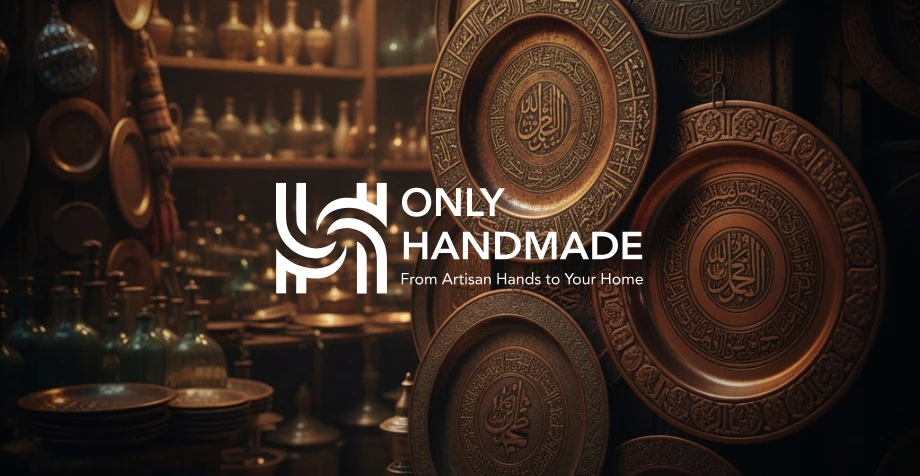
The art of engraving on copper is an authentic part of ancient Eastern arts and a traditional craft passed down through generations, carrying within it the fragrance of history. The roots of this art trace back to the early flourishing of Arab-Islamic civilization, when great attention was given to decorating mosques, palaces, and architectural landmarks with exquisite ornaments.
Over time, Arabic patterns in handcrafted copper works expanded beyond architecture to include household utensils and everyday tools, transforming them into unique artistic pieces that reflect the beauty of Arabic calligraphy and Islamic ornamentation. These engraved copper products continue to captivate heritage and art enthusiasts and are especially valued by tourists seeking souvenirs that embody the charm and spirit of the East.
The History of Copper Engraving in Arab Civilization
The history of copper engraving dates back to ancient times, with copper artifacts discovered in Syria that trace back to the late Neolithic period. This craft flourished significantly with the rise of Islamic civilization, as demand increased for decorating mosques, palaces, and schools with intricate ornamental designs.
The practice extended beyond architecture to everyday tools and household vessels, prompting artisans to develop advanced engraving techniques to meet growing demand. Copper craftsmanship became an integral part of the cultural identity of many Arab cities, forming a lasting pillar of their heritage over centuries.
The Influence of Islamic Art on Copper Engravings
Islamic art left a profound and distinctive impact on copper engraving. Muslim artists avoided depicting living beings and instead explored innovative decorative worlds rooted in abstraction and symbolism. These influences can be categorized as follows:
Floral Motifs (Arabesque)
Inspired by leaves and flowers, artisans created interwoven and symmetrical patterns known as arabesque or vegetal ornamentation. This style moved away from literal nature imitation toward abstraction, giving copper works a unique geometric elegance.
Geometric Patterns
Islamic artists mastered the use of polygons, stars, and interlocking circles, producing complex and mesmerizing designs. These patterns were not merely decorative but expressed philosophical and spiritual concepts based on mathematical precision.
Calligraphic Ornamentation
Arabic calligraphy became a central decorative element, featuring Quranic verses, prophetic sayings, wisdom texts, and poetry. This added both aesthetic beauty and spiritual depth to engraved copper works.
Discover more: How to care for antique copper artifacts
Tools Used in Hand Copper Engraving
Hand engraving on copper relies on simple traditional tools that require exceptional precision and skill. The process begins with a sturdy wooden workbench to secure the copper piece. Lightweight iron hammers are used for delicate hammering.
Core engraving tools include steel burins and chisels, often handcrafted by artisans to suit their specific engraving needs. Additional tools include anvils for leveling, compasses for precise circles and curves, and pencils for sketching the initial design before engraving begins.
The Most Beautiful Arabic Patterns in Handcrafted Copper Works
Arabic patterns in handcrafted copper display remarkable artistic richness rooted in Islamic and Arab heritage. The most admired designs combine multiple decorative elements within a single composition.
Copper pieces engraved with Quranic verses in authentic scripts such as Thuluth or Kufic are especially popular, imparting dignity and spirituality. Intricate geometric patterns—particularly star plates and interlaced polygons—captivate with their precision and harmony. Arabesque floral motifs remain equally striking, filling spaces with flowing, abstract botanical forms that bring life and elegance to copper surfaces.
Famous Arabic Calligraphy Styles Used in Engraving
Arabic calligraphy plays a vital role in copper engraving aesthetics. Artisans have used various scripts to create distinctive artistic identities:
Kufic Script: One of the oldest Arabic scripts, characterized by angular geometry, making it ideal for engraving on hard surfaces like copper. Decorative variations include foliated and floral Kufic.
Thuluth Script: Known as the “master of scripts,” admired for its elegance and complexity. It is widely used in religious inscriptions on metal artifacts.
Naskh Script: Valued for its clarity and readability, commonly used in Quran manuscripts and metal ornamentation.
Diwani Script: Originating in the Ottoman era, featuring intertwined letters and dense compositions that give engravings a highly artistic appearance.
Most Famous Arab Cities for Copper Engraving
Damascus, Syria
One of the oldest centers of copper craftsmanship, dating back to the second millennium BCE. The famous Souq Al-Nahasine remains a vibrant hub where artisans create engraved masterpieces adorned with Quranic verses, geometric, and floral motifs.
Cairo, Egypt
In historic districts such as Khan El-Khalili and Al-Gamaliya, copper workshops flourish. Since the Fatimid era, copperware evolved from daily tools into artistic decorative pieces reflecting refined Islamic engraving techniques.
Fez, Morocco
The old city of Fez, especially Seffarine Quarter, is renowned for centuries-old copper engraving traditions. Artisans maintain traditional tools and methods to decorate trays, pitchers, and household items found in nearly every Moroccan home.
Constantine, Algeria
Known as the “City of Copper,” Constantine’s copper engraving heritage dates to the Ottoman period. Its products are celebrated for high quality and intricate engravings, earning international recognition.
Discover more: Copper artifacts in modern European interior design
Ideas for Using Engraved Copper Decor at Home
Copper adds warmth and authenticity to interiors and can be integrated into both modern and classic homes:
Visual Focal Points: Use engraved copper trays as coffee-table centerpieces or wall décor. Copper-framed mirrors add elegance and depth to living rooms and entryways.
Warm Lighting: Engraved copper chandeliers, lanterns, and lamps create soft lighting and cast enchanting patterned shadows.
Small Impactful Accents: Incense burners, planters, or even copper cabinet handles add refined artisanal character to spaces.
Artistic and Investment Value of Copper Crafts
Arabic patterns in handcrafted copper works hold both artistic and historical value, making them potential long-term investments. Their worth depends on craftsmanship precision, engraving complexity, rarity, and authenticity.
Antique pieces or works by renowned artisans often carry higher value. As skilled copper engravers become fewer over time, these handmade artifacts grow increasingly rare, making each piece a lasting testament to an ancient craft.
Frequently Asked Questions
How can I distinguish real copper from plated materials?
Real copper is non-magnetic and has a distinctive reddish or yellowish hue. Light scratching reveals the same color beneath, unlike plated items.
Does copper patina affect its value?
For antiques, patina is a sign of authenticity and can increase value. For modern décor, many prefer polished copper.
What is the safest way to clean engraved copper?
Use gentle natural cleaners like lemon and salt or vinegar and flour. Clean softly with a cloth and dry thoroughly.
Are there differences in copper quality for handicrafts?
Yes. Red copper is purer and easier to engrave, while brass (copper-zinc alloy) is harder and more corrosion-resistant.
Can I request custom engraved copper designs?
Absolutely. Many artisans offer personalized engravings such as names, dates, Quranic verses, or custom patterns.




 +201063701400


