
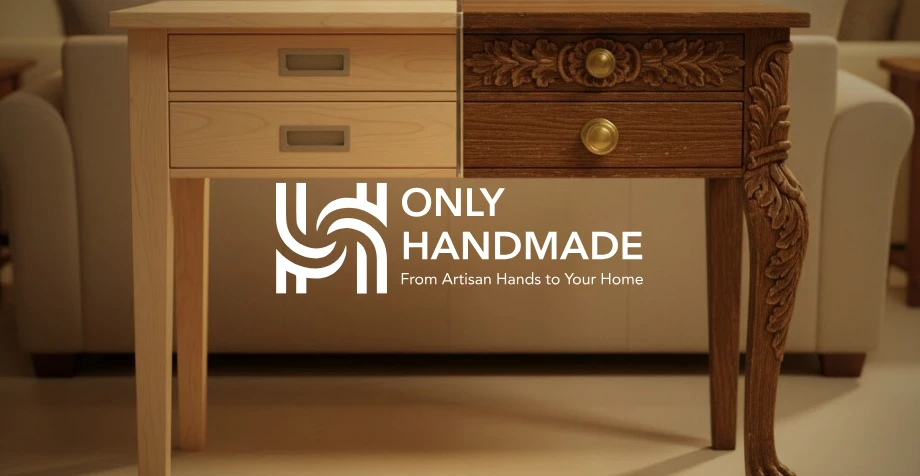
The world of furniture reveals two contrasting approaches, each with its own philosophy of design and quality. On one side stands traditional craftsmanship, which relies on the artisan’s skill and hands, where every piece carries a unique signature and tells a story of mastery. On the other side emerges modern manufacturing, which depends on advanced machinery and mass production to meet the demands of contemporary life with speed and efficiency. Understanding the difference between traditional craftsmanship and modern manufacturing in furniture goes beyond comparing solid wood with engineered materials; it is a choice between a timeless work of art and a practical product suited to today’s fast pace.
The Difference Between Traditional Craftsmanship and Modern Manufacturing in Furniture
The difference lies at the core of the production process itself. Traditional craftsmanship depends on the individual artisan’s skill and inherited manual techniques to create unique, authentic pieces, while modern manufacturing relies on machines and mass production to deliver functional furniture at a lower cost. This fundamental contrast is reflected in quality, design, materials used, and the long-term value of each piece, making it essential for anyone furnishing a personal space to understand the distinction between handmade and machine-made furniture.
Is Traditional Furniture More Durable Than Modern Furniture?
Yes, handcrafted traditional furniture is often more durable and solid. This durability is due to several key factors that make it a long-lasting choice, reducing the need for frequent replacement.
Material quality: Traditional furniture relies primarily on solid natural woods such as beech, oak, and mahogany, known for their strength and resistance to damage.
Construction techniques: Artisans use strong joinery methods such as dovetail joints and mortise-and-tenon connections, ensuring firm structural integrity.
Attention to detail: Each handmade piece receives meticulous care throughout every stage of production, minimizing weaknesses common in fast machine manufacturing.
Discover more: The Art of Blown Glass Between Tradition and Innovation
What Materials Are Used in Modern Furniture Manufacturing?
Modern manufacturing relies on a wide range of materials that suit contemporary design and fast production, differing significantly from traditional materials. The most common include:
Engineered wood: MDF (medium-density fiberboard) and chipboard are widely used due to their low cost and smooth surfaces, though they are less durable and moisture-resistant than natural wood.
Metals: Steel, aluminum, and chrome are commonly used for modern furniture frames, chair legs, and tables, giving an industrial and elegant appearance.
Glass and plastic: Glass and acrylic are used for tabletops and shelving to add a light, modern feel.
Synthetic fabrics and leather: Used in upholstery to provide a wide variety of colors and textures at affordable prices.
Why Is Handcrafted Furniture a Long-Term Investment?
Handmade furniture represents a true investment whose value can increase over time, extending beyond mere functionality.
Uniqueness and authenticity: Each handmade piece is a one-of-a-kind artwork bearing the artisan’s signature.
Superior quality: Careful attention to detail and the use of premium natural wood ensure long-lasting beauty and durability.
Resale value: Unlike mass-produced furniture that depreciates quickly, high-quality handcrafted pieces can retain or even increase their value over time.
Wood Quality in Traditional vs. Industrial Furniture
The contrast between traditional and industrial wood quality becomes clear when comparing their sources and properties.
Comparison Aspect | Traditional Wood (Solid Natural) | Industrial Wood (MDF, Chipboard)
Source | Cut directly from trees such as oak, beech, and walnut | Made from compressed wood fibers and residues with adhesives
Durability | Very strong, withstands heavy use for many years | Less durable, prone to damage and bending over time
Moisture resistance | Naturally moisture-resistant, especially mahogany and beech | Highly sensitive to moisture and water damage
Natural beauty | Features unique natural grain patterns and rich character | Smooth, uniform surface requiring veneer or paint
Cost | Higher due to quality and rarity | More affordable and economical
Design Differences Between Classic and Modern Furniture
Classic Furniture Design
Classic furniture is associated with luxury and rich detailing inspired by historic eras. It features curved lines, carved legs, and intricate hand engravings that showcase artisan skill. Dark woods, velvet, silk fabrics, and gold or bronze accents enhance its refined elegance.
Modern Furniture Design
Modern design focuses on simplicity and functionality, emerging in the early 20th century as a reaction against excessive ornamentation. It features clean geometric lines, smooth surfaces, neutral colors, and materials such as metal and glass, making it ideal for small spaces and modern lifestyles.
Discover more: Heritage Furniture in Contemporary Interior Design
Traditional Furniture: A Work of Art or Just Furniture?
Handcrafted traditional furniture transcends functionality to become an artwork in itself. Each piece reflects creativity, skill, and storytelling through intricate carvings and handcrafted details, giving it timeless aesthetic value and making it a generational heirloom.
How Can You Combine Traditional and Modern Furniture at Home?
Blending traditional and modern furniture creates a unique space that reflects personality and balance.
Start with a neutral base: Use neutral wall and floor colors to allow different styles to shine harmoniously.
Apply the 80/20 rule: Dedicate 80% to one style and 20% to accent pieces from the other.
Create a focal point: Highlight one standout piece, such as a modern sofa with a classic coffee table.
Unify elements: Use shared colors or materials across styles for cohesion.
Frequently Asked Questions
Is handmade furniture more environmentally friendly than industrial furniture?
Yes, handmade furniture is often more sustainable, using natural renewable wood and fewer harmful chemicals, while large-scale manufacturing consumes more energy and increases emissions.
Can I request modifications for factory-made furniture?
Customization is usually limited in mass-produced furniture, whereas handcrafted furniture offers full flexibility.
Is maintenance more expensive for traditional furniture?
Although the initial cost may be higher, long-term maintenance is often cheaper since solid wood can be repaired and refinished easily.
Does the country of origin affect furniture quality?
Yes, some countries are renowned for artisanal furniture traditions and premium materials, while others focus on low-cost mass production.
Do handcrafted finishes last longer?
Yes, natural oils and varnishes penetrate wood deeply and protect it longer than surface coatings used in industrial furniture.




 +201063701400


