
Blown glass art is an ancient craft that unites the intensity of fire with the precision of the artisan’s breath, transforming molten sand into shimmering works of art. The roots of this craft extend back thousands of years to the Phoenicians on the Syrian coast, who spread the technique across the Mediterranean. Over time, blowing and shaping methods evolved to meet the needs of modern life and changing artistic tastes. Today, this art stands at a crossroads: artisans strive to preserve inherited traditions while simultaneously integrating innovative elements and contemporary designs. Blown glass art between tradition and innovation represents a continuous struggle for survival and self-renewal in a rapidly changing world.
What Is the History of Glass Blowing?
The origins of glass blowing date back approximately 2,000 years and are attributed to the Phoenicians along the Syrian coast around the mid–1st century BCE. Before this invention, glass production relied on mold casting, making glassware expensive and accessible only to the wealthy.
The introduction of glass blowing revolutionized the industry by enabling faster and more affordable production. With the expansion of the Roman Empire, the technique spread widely, and Syria became a major center for glass manufacturing and export.
How Is Glass Blown by Hand?
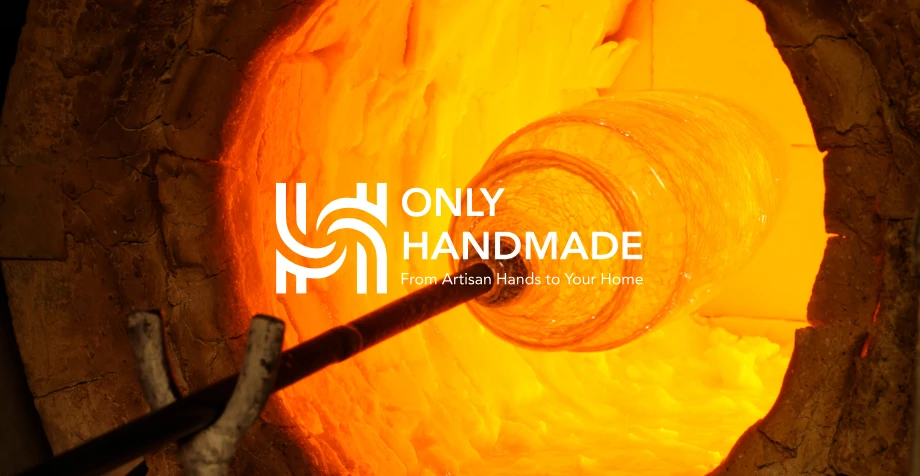
The process begins by gathering a molten glass mass from a furnace heated to over 1,000°C using a long metal blowpipe. The artisan blows into the pipe to create an initial bubble, then shapes it using tools such as tongs, scissors, wet wooden blocks, or molds. Mastery of temperature control and constant rotation is essential to achieve the desired thickness and form before the glass cools and hardens.
Secrets and Techniques of Blown Glass Shaping
The beauty of hand-shaped glass lies in the fine details added by the artisan, guided by visual judgment rather than measuring tools. Advanced techniques include:
Adding color: Through metal oxides mixed into raw materials or by rolling molten glass in colored glass powders or frits.
Mold shaping: Using molds after the initial blow to create uniform forms and patterns.
Cutting and engraving: Carving fine decorative details after partial cooling.
Cane technique: Incorporating colored glass rods to form striped patterns and intricate internal designs.
Blown Glass Art Between Tradition and Innovation
Today, glass blowing stands at the intersection of inherited traditional methods and contemporary artistic trends. While many artisans preserve ancient tools and techniques, others explore innovation through modern designs, recycled glass for sustainability, and new applications in architecture and abstract art—ensuring the continuity and evolution of this craft.
World-Renowned Blown Glass Artists
Dale Chihuly: An American artist famous for large-scale glass sculptures and vibrant installations displayed in museums and gardens worldwide. He co-founded the Pilchuck Glass School, a global center for glass art.
Lino Tagliapietra: An Italian master from Murano, renowned for traditional Murano glass-blowing techniques and for sharing these once-secret methods with international artists.
Blown Glass in Modern Home Décor
Blown glass has become a key element in modern interior design, adding elegance and luxury. It appears in contemporary lighting fixtures such as chandeliers and pendant lamps, artistic vases and sculptures, as well as decorative glass doors and partitions that allow light to flow through spaces.
The Influence of Islamic Glass Art on Modern Designs
Islamic glass art has left a lasting mark on contemporary design. Modern artists draw inspiration from intricate geometric and vegetal motifs once used in mosque lamps and vessels. Techniques such as gilding and enamel decoration, perfected during the Ayyubid and Mamluk eras, continue to inspire today’s glass artists—demonstrating the enduring legacy of this rich heritage.
Types of Glass Used in Blowing
Soda-lime glass (soft glass): The most common type, composed of silica, soda ash, and lime. Its lower melting point makes it ideal for traditional blown glassware and décor.
Borosilicate glass (hard glass): Contains boron oxide, offering superior thermal shock resistance. It requires higher temperatures and is commonly used for laboratory equipment, cookware, and durable artistic works.
Frequently Asked Questions
Is learning glass blowing safe?
Yes, when taught under professional supervision in properly equipped studios with strict safety measures.
What determines the price of a hand-blown glass piece?
Size, complexity, colors, techniques, and the artist’s reputation all influence cost.
Can recycled glass be used in blowing?
Yes, many studios use recycled glass to promote sustainability, though it requires expertise to manage impurities.
What is the difference between blown glass and fused glass?
Blown glass is shaped by inflating molten glass, while fused glass is created by melting flat glass pieces together in a kiln.
How long does it take to make one blown glass piece?
Simple items may take 15–30 minutes, while complex artworks can require hours plus extended annealing time.




 +201063701400


