
In a world that is becoming increasingly aware of the importance of healthy and sustainable choices, handmade natural cotton rugs stand out as true works of art. They don’t just add warmth and beauty to your home; they also reflect your commitment to a healthier environment. Woven with care from 100% natural fibers and free from harmful chemicals, these rugs are the perfect choice for children and allergy sufferers. Each piece tells a story of heritage and craftsmanship, offering durability and quality that surpass mass-produced alternatives. Choosing such a rug is not merely a décor decision
it is an investment in quality, health, and authentic handmade artistry.
What is a handmade natural cotton rug?
A handmade natural cotton rug is a type of floor covering woven entirely from 100% natural cotton threads using traditional techniques. Crafted by skilled artisans on wooden looms, the process can take months to complete a single rug. Every piece is unique, reflecting authentic cultural and artistic heritage in its patterns and colors.
Why is cotton a healthy choice for your family?
Cotton rugs are ideal for maintaining a healthy home environment, thanks to their natural properties that make them safe and comfortable for all family members.
Hypoallergenic
Being a natural fiber, cotton is allergy-friendly, making cotton rugs an excellent choice for children’s rooms and for people suffering from asthma or allergies. They contain no harsh chemicals that could irritate the skin or respiratory system.
Improves indoor air quality
Cotton allows airflow and prevents moisture buildup, reducing the risk of mold and mildew growth. Additionally, cotton rugs help trap dust and allergens, preventing them from circulating in the air until vacuumed.
The Best Types of Cotton Used in Handmade Rug Weaving
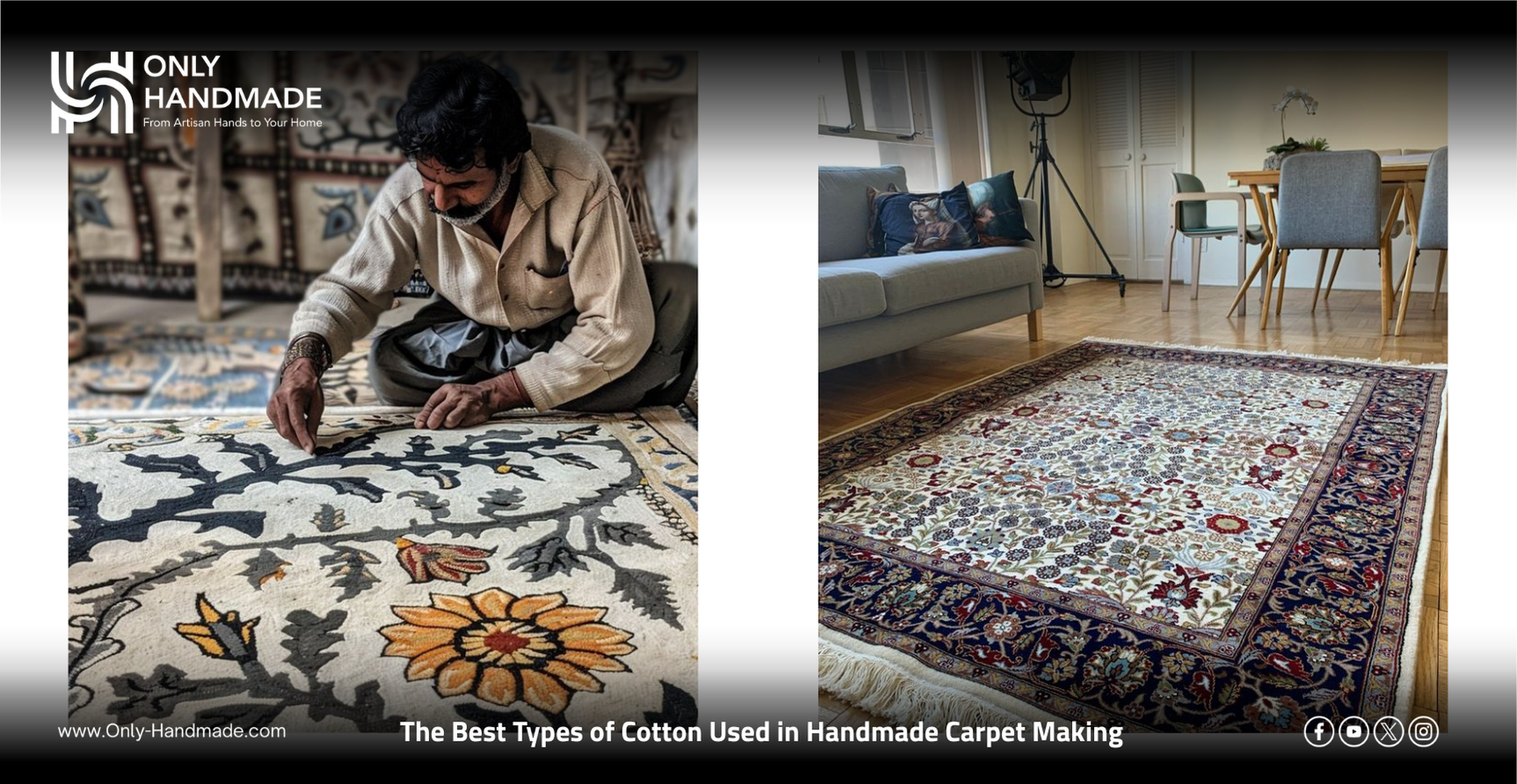
The quality and durability of handmade rugs largely depend on the type of cotton used in their production. Egyptian cotton is considered one of the finest and most renowned varieties worldwide in this field. Known for its long-staple fibers, Egyptian cotton offers several distinctive advantages:
- Exceptional durability: Its long fibers make the threads stronger and more resistant to daily use and constant friction.
- Softness and natural sheen: They give the rug an incredibly smooth touch and an elegant, lustrous appearance.
- Excellent color absorption: Its high dye-absorption capacity allows for vibrant, rich colors that last for years.
Natural Cotton Rugs: A Long-Term Investment for Your Home
Buying a handmade natural cotton rug is not just an aesthetic addition to your home; it is a true investment whose value lasts for many years. High-quality natural cotton is known for its durability and ability to withstand daily use while maintaining its original shape and color. Unlike synthetic rugs that quickly lose their appeal, handmade rugs grow in beauty and value over time and can even be passed down as artistic heirlooms across generations.
Learn more: Handmade Silk Rugs
Simple Ways to Care for Natural Cotton Rugs
To preserve the beauty and quality of your cotton rug for as long as possible, follow these simple and effective guidelines:
- Regular cleaning: Use a vacuum cleaner once or twice a week to remove surface dust and dirt. It is recommended to clean both sides to ensure trapped dirt is eliminated.
- Stain treatment: If a liquid spills, treat the stain immediately by blotting with a clean white cloth to prevent spreading. For tougher stains, a solution of water and white vinegar can be used.
- Deep cleaning: Most small cotton rugs can be machine-washed on a gentle cycle. For larger rugs, it is best to send them to professional rug cleaners to preserve their fibers and colors.
- Proper drying: Make sure the rug is completely air-dried outdoors, away from direct sunlight, to prevent mold and unpleasant odors.
Prices of Handmade Cotton Rugs
The prices of handmade cotton rugs vary significantly depending on several key factors. While they may be more expensive than machine-made rugs, this cost reflects their true value and superior quality.
| Influencing Factor | Description |
| Cotton Quality | Using premium types such as Egyptian long-staple cotton increases the price of the rug. |
| Knot Density | The higher the number of knots per square inch, the greater the detail and quality, which leads to a higher price. |
| Design Complexity | Intricate designs that require more time and effort from the artisan are more costly. |
| Size | Naturally, the price increases with the size of the rug. |
| Dyes Used | Using natural dyes extracted from plants raises the rug’s value compared to chemical dyes. |
Although the initial investment may be higher, the durability and long lifespan of handmade rugs make them an economical choice in the long run.
Read also: Stages of Coloring Leather by Hand with Natural Materials
Cotton Rugs as a Key Decorative Element in the Modern Home
Rugs are no longer just floor coverings but have become an integral part of the identity of the modern home. Cotton rugs stand out as the perfect choice, combining simplicity with elegance, making them a central piece in contemporary interior design. Their versatility allows them to harmonize with various décor styles thanks to their diverse designs and either neutral or vibrant colors. Their role as an essential decorative piece can be summarized as follows:
- Adding warmth and texture: Cotton rugs provide a sense of warmth and comfort underfoot, adding a rich layer of texture that softens sleek surfaces in modern décor.
- Defining spaces: In open-plan homes, rugs act as effective visual tools for defining different zones, such as the seating area or dining space.
- Versatility and flexibility: Thanks to their relatively light weight and easy mobility, cotton rugs can be repositioned effortlessly to refresh the look of a room from time to time.
From Tradition to Modernity: The History of Handmade Cotton Rugs
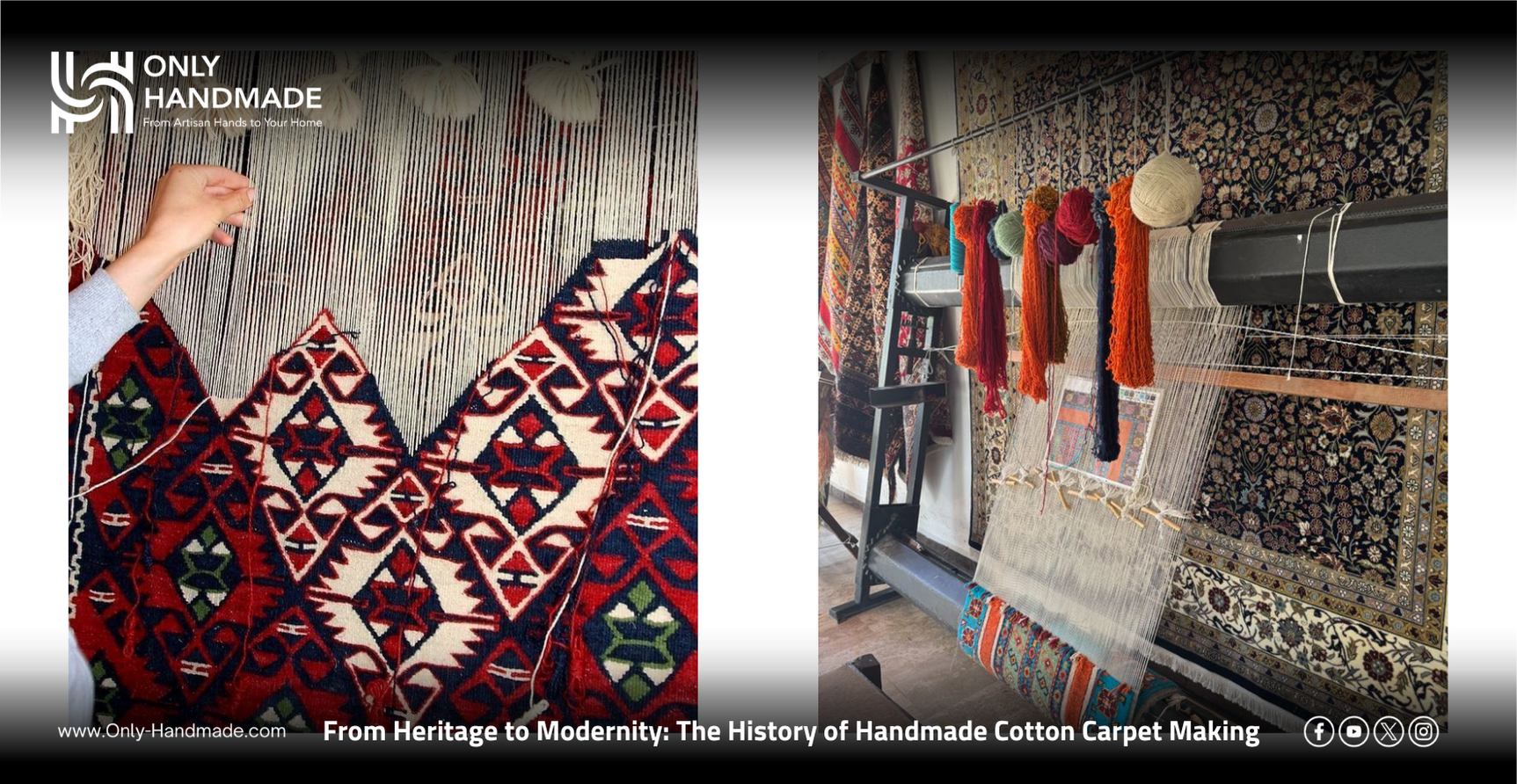
The art of rug making dates back thousands of years, originally emerging as a human necessity to create warm and comfortable coverings from natural materials. Historical inscriptions in ancient Egypt show the use of cotton and linen in textile production as far back as the Badari civilization before Christ. This craft was passed down through civilizations, evolving from purely functional items into artistic masterpieces that reflect cultural identity. Rug making flourished particularly in Persia, Turkey, and India, where artisans developed unique knotting and weaving techniques along with intricate designs that became distinctive features of each region. Over time, the craft has preserved its artisanal authenticity while embracing modern designs and colors to suit contemporary tastes, becoming a bridge that connects the heritage of the past with the elegance of the present.
FAQs
Is cotton rug suitable for high-traffic areas like hallways?
Yes, tightly woven cotton rugs can be durable and suitable for moderate to high-traffic areas. It’s recommended to choose flatweave rugs, as they are more resistant to wear and better at hiding dirt.
Do new cotton rugs shed lint? How can I deal with it?
Yes, it’s normal for some lint to shed from new rugs made of natural fibers like cotton. This will gradually decrease with use and regular vacuuming. Avoid using a strong brush and instead vacuum regularly to help remove excess fibers.
Do naturally dyed cotton rugs fade over time?
Natural dyes are known for their stability and beauty, which can even gain more charm as time passes. However, continuous exposure to direct sunlight may cause fading in any type of rug. It is recommended to rotate the rug periodically to evenly distribute sunlight exposure.
What is the difference between Indian, Turkish, and Egyptian cotton rugs?
The difference mainly lies in weaving techniques and designs. Egyptian rugs are famous for using luxurious long-staple Egyptian cotton. Turkish rugs are often characterized by double knots and geometric or floral patterns. Indian rugs, on the other hand, are known for their wide variety of colors and styles, often blending Persian and modern designs.
How can I prevent a cotton rug from slipping on smooth floors?
Since cotton rugs are often lightweight, it is highly recommended to use a non-slip rug pad underneath. This not only prevents slipping but also provides extra cushioning while protecting both the rug and the flooring from wear and tear




 +201063701400


