
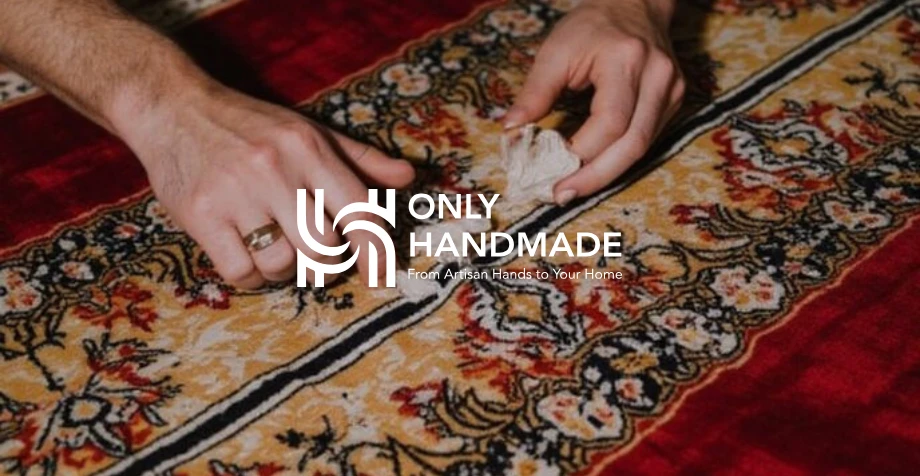
When threads of natural silk intertwine with the hands of skilled artisans, a masterpiece is born—one that transcends being just a piece of furniture to become an investment in beauty and authenticity. A handmade silk carpet is more than just a floor covering; it is a story told by every knot, a touch of luxury that illuminates any space it graces. This carpet is distinguished by its enchanting luster that shifts with the direction of light, and its soft texture that caresses the senses, offering a feeling of warmth and elegance. Each piece is unique in its design and vibrant colors, making it a priceless addition to your home décor and a testament to a rich artistic heritage.
.png)
How can you distinguish between natural and artificial silk carpets?
Distinguishing between natural silk and synthetic fibers such as viscose (artificial silk) is essential to determine the carpet’s value and quality. Several simple yet effective methods can be used, the most important of which are:
- The friction test: when rubbing natural silk threads between your fingers, you will feel warmth, while artificial silk remains unaffected by heat.
- In addition, natural silk has a multi-faceted sheen that changes with the viewing angle, whereas the shine of artificial silk is constant and whiter.
- The burn test is the most accurate: burning a thread of natural silk produces a smell similar to burnt hair and leaves a fragile ash, whereas artificial silk melts quickly and gives off a plastic-like odor.
Prices of Handmade Silk Carpets
The price of a handmade silk carpet is determined by a combination of intertwined factors that reflect the craftsmanship and effort invested in its creation:
- The more intricate and detailed the design, the higher its value.
- The size of the carpet directly affects its price, as larger pieces require more time and materials.
- Raw materials play a decisive role: carpets made of pure silk are more expensive than those blended with wool or cotton.
- The age and condition of the carpet can add significant historical and collectible value, especially if it has been well preserved.
Famous Types of Handmade Silk Carpets Around the World
Handmade silk carpets enjoy global fame, with certain regions considered historic centers of this luxurious craft, each with its unique character:
.png)
- Persian (Iranian) Carpets: Among the most luxurious and expensive in the world, known for the high quality of silk and wool used. Cities like Qom and Tabriz are renowned for producing pure silk carpets with intricate artistic designs and Islamic or classical motifs.
- Turkish Carpets: Distinguished by their unique ornamental patterns and vibrant colors, also known as Anatolian rugs. Turkish artisans use symmetrical knots (Turkish knot), which give the carpets strength and durability. Metallic and golden threads are often incorporated.
- Chinese Carpets: Recognized for their calm, classical designs often featuring flowers and floral patterns. Although beautiful in color, they may lose some of their luster over time compared to Persian and Turkish carpets.
See also: Handmade Wool Carpets
Beginners’ Guide to Buying Your First Handmade Silk Carpet
When purchasing your first handmade silk carpet, it is important to pay attention to several key points to ensure you acquire an authentic and valuable piece:
- Set your budget in advance, as prices vary widely.
- Check the back of the carpet: in genuine handmade carpets, the design on the back is just as clear as the front, and each knot is visible.
- Ask about the knot count: the higher the number, the more detailed and higher quality the carpet.
- Verify the type of dyes used by rubbing a damp cloth on a small area; natural dyes do not easily spread or fade.
Secrets of Iranian Handmade Silk Carpet Weaving
The value of Iranian carpets lies in their deep history and inherited techniques, beginning with the cultivation of silkworms fed on mulberry leaves. The silk produced is hand-spun to preserve its quality, and natural materials such as pomegranate peels and parsley are used for dyeing, giving the carpets bright and lasting colors.
Weaving a single carpet requires tremendous effort and time, often stretching over months or even years. Craftspeople most often women meticulously tie millions of knots to create intricate designs that narrate stories from Persian heritage.
.png)
What is knot density in carpets and how does it affect quality?
Knot density, measured by the number of knots per square inch or square centimeter, is a key indicator of the quality and durability of a handmade carpet. The higher the number of knots, the more compact and stronger the carpet becomes, enabling it to resist wear and tear over time.
High density also allows weavers to execute more precise and detailed designs, which increases the artistic and financial value of the carpet. Knot density can be easily checked by turning the carpet over and counting the knots in a defined area on its back.
Qom silk carpets: Why are they the most expensive?
Handmade carpets produced in the city of Qom in Iran are among the most luxurious and valuable carpets in the world. This exceptional value is mainly due to several factors, the most important being the use of 100% pure silk in weaving, which gives the carpet unmatched luster and softness.
In addition, Qom carpets are distinguished by very high knot density, often exceeding a thousand knots per square meter, which allows for the creation of highly intricate and sophisticated designs. Weaving a single carpet can take many months, or even years, of meticulous manual work by master artisans.
What is wool-and-silk mixed carpet and what are its advantages?
Wool and silk mixed carpet combines the best qualities of both materials: wool forms the main foundation of the carpet, while silk is used to highlight specific details in the design. This clever blend results in a carpet that unites the durability of wool with the elegance and luster of silk. Its main advantages include:
- Durability and elegance: Wool provides strength and resilience, while silk adds a touch of sophistication and beauty.
- Affordable luxury: Usually priced lower than pure silk carpets, making it an economical choice for those seeking luxury.
- Texture variety: The contrast between the soft texture of wool and the shimmering brilliance of silk creates a unique visual and tactile effect.
Why is silk carpet considered an artwork to be hung on walls?
Handmade silk carpets, especially those with intricate patterns and fine details, are regarded as woven artworks. Hanging them on walls is not only a way to protect them from wear and daily use but also to highlight their artistic and high craftsmanship value. The vibrant colors and designs that tell stories of heritage and culture make them a focal point in any décor, adding a touch of authenticity and luxury that no other piece of furniture can match.
Frequently Asked Questions
Does new silk carpet shed fibers?
Yes, some excess fibers may shed at first, which is completely normal for high-quality handmade carpets. This can be removed with gentle manual vacuuming, and shedding decreases over time with use.
What is the best underlay for silk carpet?
It is recommended to use padding made of natural felt or high-quality rubber. This helps prevent the carpet from slipping, provides an extra protective layer against friction, and increases comfort when walking on it.
Can silk carpet damage be repaired?
Yes, most damages such as cuts or frayed edges can be repaired by specialists in handmade carpet restoration. These craftsmen use precise techniques and matching threads to preserve the value and original appearance of the carpet.
How does direct sunlight affect silk carpet?
Continuous exposure to direct sunlight can cause the natural colors of silk carpets to fade over time. It is recommended to rotate the carpet periodically and use light curtains to reduce the effects of UV rays.
Is silk carpet suitable for high-traffic areas?
Although durable, silk is a delicate and sensitive fiber compared to wool. Therefore, silk carpets are best placed in low-traffic areas such as formal bedrooms or salons to maintain their beauty and elegance for as long as possible.




 +201063701400


